Over 40 Years in BusinessISO 27001 compliantPublic sector: GSA contract holder
LA 562-298-5000 · Chicagoland 312-432-5300 · Phoenix 602-733-6807 · Client Support
Over 40 Years in BusinessISO 27001 compliantPublic sector: GSA contract holder
LA 562-298-5000 · Chicagoland 312-432-5300 · Phoenix 602-733-6807 · Client Support
Cybersecurity services
Los Angeles · Chicago · Phoenix
Reduce cyber risk, support compliance and protect daily operations in six clear steps: know where you stand, prevent attacks, detect and respond 24/7, prove it to insurers and auditors, recover fast, and secure your cameras and doors too. One accountable partner, a 24/7 NOC/SOC and over 40 years in business technology.
Or call the BTI IT team: LA 323-510-8003 · Chicago 312-492-2613 · Phoenix 480-272-8728
Free security assessment
No cost, no obligation. Business inquiries only.
Your cybersecurity journey
Managed cybersecurity services are outsourced security operations: continuous monitoring, threat detection and response, vulnerability management and compliance support, delivered by a provider instead of, or alongside, your internal team. Buying it is hard because the market sells parts, not programs. BTI builds every client program in the same six steps. Each step is itemized, so you can start where your risk is highest and add the rest when you are ready.
Not sure where you stand? Most clients start with step 1.
Step 1 · Assess
Before you buy more tools, find out what an attacker would find today. An assessment tests your network, users and Microsoft 365 the way a real attacker would and gives you a ranked list of fixes, so every dollar goes to the biggest risk first.
The question it answers: What would an attacker find today?
| Approach | How it works | Pros | Cons |
|---|---|---|---|
| External test | Probes your internet-facing systems from outside. | Shows what anyone on the internet can see. | Misses what happens after a phished user clicks. |
| Internal test | Starts from a machine inside your network and maps what an attacker could reach. | Reflects how real breaches spread. | Needs safe, controlled methods to avoid disruption. |
| Ship-a-box appliance test | A device is mailed to you and plugged into the network. | Easy to schedule. | Does not test the trusted software and vendors attackers often abuse. |
| Credential-free internal test | Tests from selected machines the way an attacker would, without admin passwords. | Realistic and repeatable. | Covers the machines in scope, so choose a representative sample. |
| Annual vs recurring testing | Once a year, or monthly scans plus quarterly tests with retesting. | Annual is cheaper; recurring builds a trend line. | Annual results go stale; recurring needs a remediation owner. |
Independence matters as much as method. Reports produced by the same tools and team that defend your network do not carry the same weight with insurers and auditors as third-party evidence.
Step 2 · Prevent
Most breaches start with a phished password, an unpatched device or an open remote access port. Prevention closes those doors in layers, so one mistake does not turn into an incident.
The question it answers: How do we stop common attacks from working?
| Layer | Minimum | Stronger option | Ask before you buy |
|---|---|---|---|
| Endpoints | Business antivirus on every device. | EDR with network isolation and rollback, watched 24/7. | Who responds to an EDR alert overnight? |
| Platform spam filtering. | Dedicated filtering, SPF, DKIM and DMARC, and phishing simulation with training. | How are impersonation and payment fraud handled? | |
| Identity | MFA on email. | MFA everywhere, conditional access, managed devices and just-in-time admin rights. | Which accounts still have standing admin access? |
| Network | A firewall at the main office. | Managed firewalls at every site, SASE for remote users and network monitoring. | Are remote access ports closed at every location? |
| Patching | Automatic updates. | Patching under a written agreement with verified closure and exception tracking. | How do you prove a critical patch was applied? |
| Website and DNS | Registrar defaults and a web host. | Protective DNS filtering, registrar lock with MFA, DNSSEC where supported, a web application firewall and change monitoring. | Who owns the domain, DNS and website security today? |
Step 3 · Detect and respond
Tools raise alerts; people stop attacks. Detection and response means someone is watching your devices, accounts, logs and network around the clock, connects the dots between them and is authorized to act, including at 3 a.m. on a holiday.
The question it answers: Who notices and acts at 3 a.m.?
| Decision | Option A | Option B | What usually works for mid-sized organizations |
|---|---|---|---|
| Who watches | Your staff, during business hours | A provider's analysts, 24/7 | 24/7 analysts; attacks are often timed for nights and holidays. |
| Who acts | Provider alerts you; you contain | Provider contains under pre-approved actions | Pre-approved containment written into the incident response plan. |
| Incident response | Separate retainer with an outside firm | Included with the managed service | Included, with cooperation with your carrier's forensics firm. |
| Log retention | Whatever each tool keeps | Central SIEM with defined retention | Central retention long enough for investigations and insurer requests. |
| Network visibility | Someone notices when the internet is down | Network monitoring paired with Network Security & SASE | Outages, performance problems and security events on your network are caught and acted on. |
BTI follows the right-hand column: monitored EDR, the 24/7 NOC/SOC, a managed SIEM with optional 1-year log retention, network monitoring, and incident response that, for managed security clients, is included in BTI managed security as defined in your service agreement. When an incident calls for on-site work, BTI staff respond in Los Angeles and Southern California, Chicagoland and the Phoenix metro; elsewhere in the U.S., BTI coordinates on-site help through partners.
Step 4 · Govern and prove
Insurers, auditors and customers now ask for proof, not promises. Governance turns your controls into written policies, plans and evidence, led by a security leader who reports to leadership in plain language.
The question it answers: Can we show insurers, auditors and customers that it works?
| Path | What it involves | Who it fits | Tradeoff |
|---|---|---|---|
| Self-managed policies | Templates adapted by internal staff. | Organizations with few outside requests. | Policies drift from reality; no one owns updates. |
| Governance software | A platform for policies, training records and risk registers. | Teams with an internal owner who will keep it current. | Tools organize evidence; they do not create it. |
| Framework project with a consultant | A one-time gap assessment against a framework such as NIST CSF or PCI DSS. | A specific audit or customer deadline. | Needs ongoing work to stay true after the project. |
| vCISO-led managed program | A named security leader, a written WISP and incident response plan, tabletop exercises, an evidence locker and board reporting. | Organizations with recurring insurance, audit or customer demands. | Requires an internal compliance champion to participate. |
For cyber insurance, the goal is that your application answers, your controls and your evidence match. BTI works with your carrier's requirements, builds them into your WISP, incident response plan, policies and evidence controls, and during an incident coordinates with your carrier and its designated response team. BTI does not sell insurance or give coverage advice.
Step 5 · Recover
If the worst happens, how much data can you afford to lose, and how long can you be down? Recovery is a tested plan to get back to work, not just a backup job that reports success.
The question it answers: How fast are we working again after the worst day?
One-click rollback on supported endpoints is fast remediation for a compromised device, not a replacement for protected backup.
Step 6 · Converged
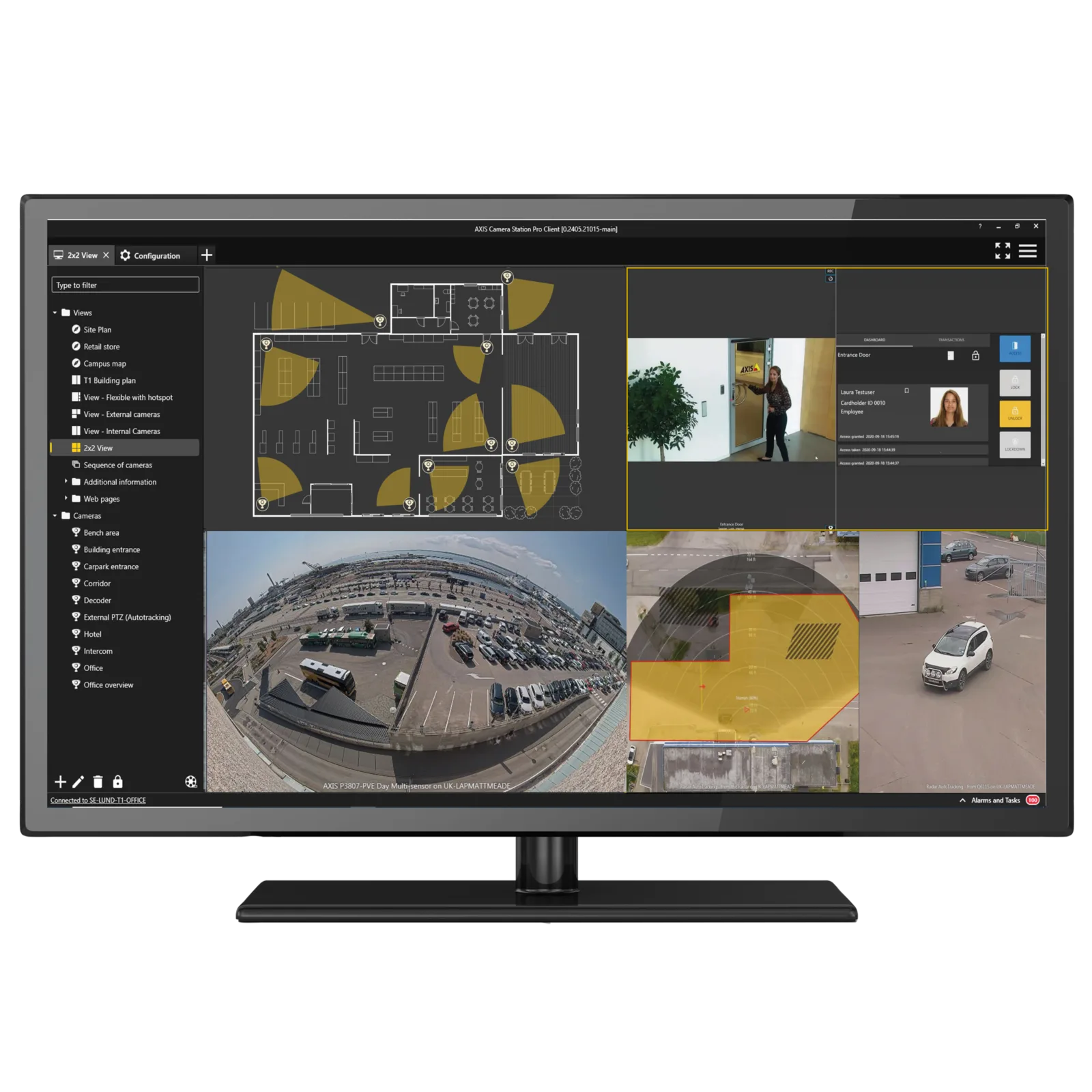
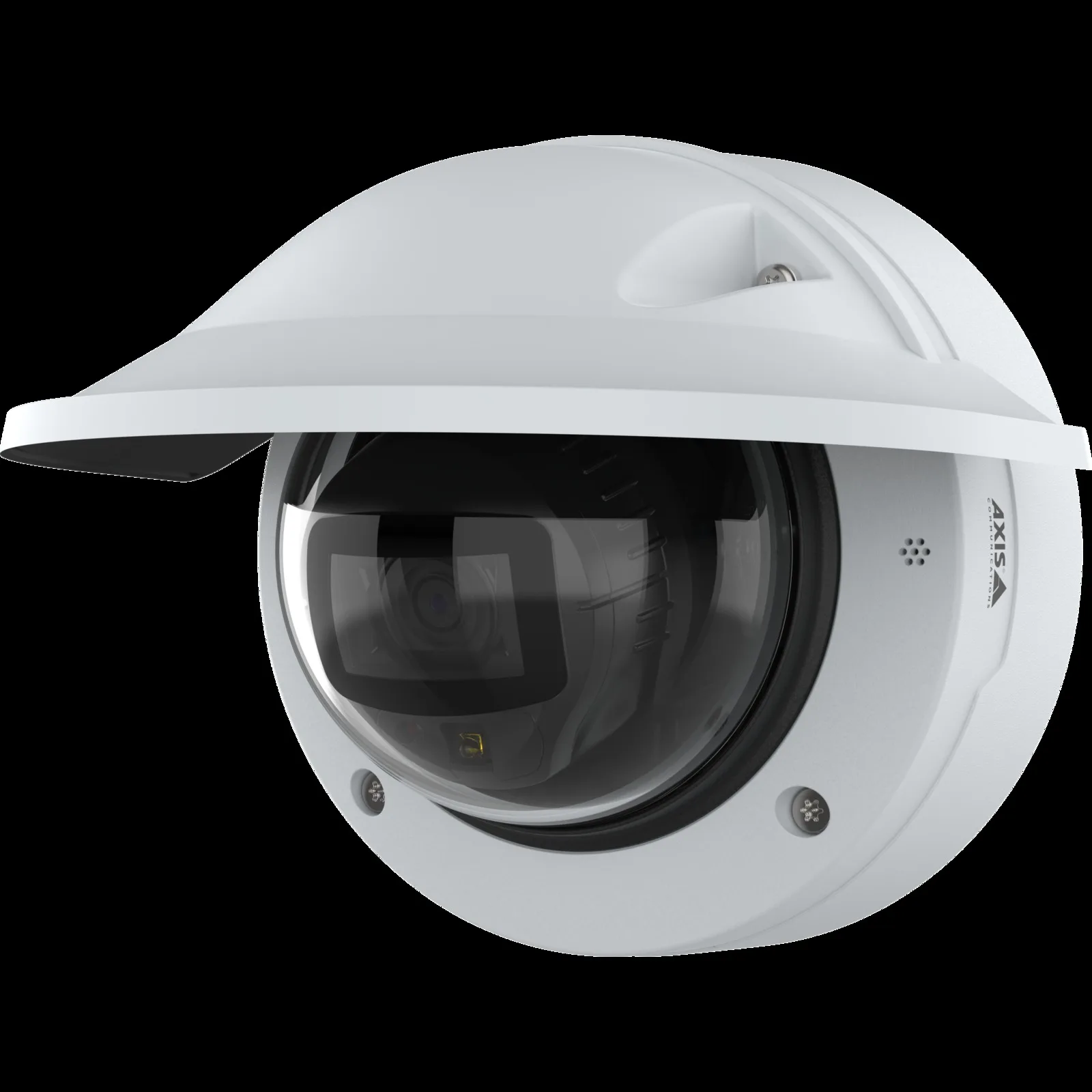
Cameras, door controllers, alarm panels and building systems are networked devices too. BTI installs and supports them and secures them with the same segmentation, patching and 24/7 monitoring as the rest of your network, so they never become the back door.
The question it answers: Are cameras, doors and other devices a back door?
Cameras, access control panels, alarm systems, recorders and building controls are networked computers, often with long lives and vendor remote access. Organizations usually choose among three approaches: leave them with a separate integrator and accept the risk, segment them and monitor them from IT while the integrator maintains them, or use one partner that installs, supports and secures both sides. The third option closes the gap where an installer's remote access tool or an unpatched recorder becomes the way in.
BTI installs and supports physical security systems and brings them under the same governance as the rest of your network: segmentation, firmware management, and MFA on remote access.
Why BTI
One accountable partner for IT, cybersecurity and physical security, with the people, proof and local teams to back it up.
BTI's 24/7 NOC/SOC, operated with high-security enterprise partners, monitors endpoints, identities, logs and networks and acts on threats around the clock as part of GlobalView Support Services.
BTI installs and supports cameras, access control and alarms and secures them with your IT, so nothing falls between an IT provider and a security integrator.
Cyber Watch and Cyber Liability Essentials give you recurring testing and written evidence from an independent testing partner, not just reports from the team that defends you.
A vCISO owns your roadmap, policies and board reporting, and keeps your controls in line with insurer and auditor requests.
Microsoft Solutions Partner · 7 capability domains · 30+ certified platforms. Certified engineers design, deploy and support every layer.
As a Licensed Alarm Company Operator, BTI runs LiveScan background checks on its team before they work in client buildings and systems.
Local engineers in Los Angeles, Chicago and Phoenix, with on-site response from BTI staff in those metros and partner coverage elsewhere in the U.S.
Fully managed or co-managed, with every service itemized line by line. Financing at 3.99% is available for qualified buyers, subject to credit approval.
Or call the BTI IT team: Los Angeles / Southern California 323-510-8003 · Chicagoland 312-492-2613 · Phoenix 480-272-8728
How BTI delivers
Cybersecurity works best as part of how your IT is run. Choose the model that fits your team; either way, the split of responsibilities is written down.
BTI runs IT and security as one program. One accountable partner and fewer handoffs. Fits organizations without internal IT or that want to consolidate vendors.
Your IT team keeps day-to-day control; BTI adds 24/7 monitoring, testing and security leadership under a written responsibility matrix.
A defined engagement such as an assessment, firewall refresh or migration, with a fixed scope and a clear finish line.
Help desk, monitoring, patching and backup with security built into daily operations.
Network upgrades, migrations and rollouts designed with security from day one.
Strategy, roadmaps and technology decisions with risk and budget in view.
Patch and vulnerability management under a Protection Level Agreement.
Price depends on users, endpoints, sites, the detection level (managed antivirus or monitored EDR), network and log monitoring scope, testing frequency, log retention, compliance scope and on-site needs. BTI itemizes every service so finance and IT can see exactly what they pay for: see how itemized pricing works.
As a trusted cybersecurity services company, BTI supports critical sectors including:
Threat protection and compliance support mapped to the regulations your industry faces.

HIPAA Security Rule risk analysis, 24/7 threat monitoring and ransomware recovery.
Healthcare cybersecurity and HIPAA compliance →
Security controls, monitoring and incident response for public agencies.
Government cybersecurity →
Student data protection, FERPA-aligned controls and phishing defense for schools.
School cybersecurity and FERPA compliance →
Ransomware defense for warehouses, plants and the vendors connected to them.
Logistics and supply chain cybersecurity →
GLBA and FTC Safeguards Rule programs for CPA, tax, title and insurance firms.
Cybersecurity for CPA and financial firms →
AWIA risk assessment support and network segmentation for water utilities.
Water utility cybersecurity →
Payment fraud, email compromise and ransomware protection for contractors.
Construction cybersecurity →
Donor data protection, PCI for online giving and email security for churches and nonprofits.
Nonprofit and church cybersecurity →
PCI, license plate data and PARCS network protection for parking and venues.
Parking and venue cybersecurity →“Our first and primary goal is to deliver the foremost level of technical quality that can be delivered reliably for each client’s budget.”
Eric Brackett, Founder & President of BTI Communications Group

Watch How BTI Empowers Mid-Market Growth with Converged IT & Security
Most organizations do not have a cybersecurity tool problem. They have a prioritization problem. They are managing more cloud applications, connected devices, and vendors while facing [music] more pressure to adopt artificial intelligence. Leadership is being asked to make security decisions without a clear view of what is working or what is missing. The result is often fragmented purchasing. Another tool, another vendor, but not necessarily better protection. Cybersecurity maturity replaces that uncertainty with a practical operating road map. It begins by understanding risk, assigning ownership, and securing the fundamentals to improve over time.
Networks now support everything from cameras and access control to VOIP and Internet of Things systems. With multiple providers managing different silos, important gaps can still develop between responsibilities. Modern security requires coordination across technology, people, vendors, [music] policies, and business operations.
The objective is not to reach maximum maturity overnight, but to answer five practical questions. What matters most? Who is responsible? Are basic controls in place? And can you prove they are working? The BTI cybersecurity maturity road map organizes that journey into six levels, from reactive to AI governed. These are not rigid gates. You may have strong protection in one area, but inconsistent identity management in another. At level zero, security is reactive. The priority is visibility, identifying critical systems, and stopping the most preventable risks. Level one puts essential protections in place, making MFA, patching, and employee training consistent and repeatable. Level two shifts from owning tools to operating controls through managed detection and response.
Managed security means controls are configured, monitored, and improved, not just installed. At level three, organizations must prove security is working for insurers, customers, and regulators. Compliance requires policies, procedures, and evidence demonstrating that controls actually operated as required. Level four is where IT, cybersecurity, physical security, and communications converge into a coordinated ecosystem.
Converged security means shared standards and clearer escalation paths across all technology domains. Level five establishes the foundation for governed AI adoption, managing the risks of AI assistance and autonomous agents.
AI readiness is built on top of identity security, data governance, and clear human accountability. Leadership should prioritize investment based on risk, [music] starting with immediate risk reduction and operational consistency. The right sequence depends on your business, but never allow advanced initiatives to distract from weak fundamentals. Avoid common mistakes like purchasing tools without ownership or deploying AI before establishing data governance.
BTI helps organizations assess maturity and address priority gaps through managed IT and cybersecurity operations. Download the cybersecurity maturity roadmap guide today, and schedule a discussion to begin your journey toward clarity and security.
Download The Cybersecurity Maturity Roadmap
Free executive guide
Video Transcript
Welcome to the 2026 Strategic Advisory Guide by BTI Communications Group. This executive guide focuses on managed IT, cybersecurity, and operational scalability for organizations over 50 people or those in particular industries like healthcare, manufacturing, financial services, or logistics.
This publication addresses the IT management concerns of ownership, C-level executives, IT Directors, and operations leaders in healthcare, manufacturing, logistics, and regulated industries. The content is advisory and not legal counsel.
Fast-growing and multi-site organizations in regulated industries like healthcare, financial services, manufacturing, and logistics with IT-related operational issues, or those struggling to understand new regulations or contracts with IT dependencies, will want to listen to what we have to offer.
Our goal in this document is to explain what quality and operational excellence look like in 2026 managed IT services. The sections we will cover in this highlight video include managed infrastructure and IT, cybersecurity, converged security, identity, compliance, and AI-ready infrastructure. Let’s explore how unified infrastructure support can transform your organization.
Welcome to our discussion on the case for unified infrastructure. We’ll explore how integrating IT, cybersecurity, VoIP, physical security, and compliance management under a phased-in managed or co-managed partner like BTI enhances performance and reduces risks for modern organizations.
Organizations benefit greatly over time from BTI’s unified infrastructure project and support performance. With over 40 years of experience, vendor and customer relationships, BTI offers best-of-breed products, pricing, design, engineering excellence, and support, plus low-cost managed or co-managed service tailored to each client’s needs. BTI’s approach prevents problems across several otherwise disconnected technology domains, ensuring reliability and accountability across all covered technology layers for significantly less than the cost of trying to manage all that in-house.
Growing organizations outgrow small IT managed service providers when operational failures impact the business. During growth stages, any weakness becomes a slowdown or a stoppage at the worst times. What was once acceptable Wi-Fi, network, phone, cybersecurity, or compliance work can quickly become unacceptable during growth. BTI’s unified support model addresses these challenges with comprehensive field assessments, infrastructure expertise, and proactive support to help your company avoid unnecessary pitfalls.
Organizations often miss the gradual signs of outgrowing their IT provider. Issues like Wi-Fi disconnects, VoIP degradation, and unmanaged switches indicate a support model lagging behind business needs. These are not just IT problems, but business continuity challenges requiring a support model designed for current complexities to ensure reliability and scalability.
Organizations often outgrow their managed service provider gradually. Key signs include a vendor unable to meet growing demands on time, issues closed without root-cause resolution, or inconsistent support quality. Transitioning to a more capable partner can eliminate these challenges.
Siloed IT, security, and VoIP vendors create significant risks as well. Documentation failures and escalation delays compound issues, leading to costly business disruptions. Consolidating vendors can mitigate these risks effectively.
An operationally mature managed IT partner excels in six key areas: structured documentation, proactive monitoring, layered cybersecurity, consistent multi-site execution, defined escalation paths, and compliance-ready reporting. These capabilities ensure reliable service, security integration, and governance support. Always request evidence of these capabilities when evaluating potential partners to ensure true operational maturity.
Modernization should be incremental, not all-or-nothing. Start by addressing immediate disruptions, stabilize the environment, and document progress. Add targeted support to ease burdens, then expand as trust builds. This phased approach reduces risk and ensures each improvement is validated before moving forward, enhancing reliability and productivity across operations.
Unified infrastructure support can include networking, cybersecurity, VoIP, cloud, and endpoints in one cohesive model. Unlike traditional managed service providers, BTI’s model ensures recommendations enhance performance and reduce risk with itemized, fixed-cost work and consistent quality standards. This leads to clearer ownership, deeper visibility, and consistent outcomes, ultimately improving business operations and accountability.
Achieving the lowest qualified price requires transparency. Without visibility into provider operations, costs from downtime and rework can outweigh savings. BTI offers both line-item price and quality transparency. BrightGauge dashboards and structured reporting are included, enabling informed client decisions. ISO 27001 compliance, transparent pricing, and fixed-cost sole-source scoping support dependable delivery and project outcomes with shared support responsibility roles clearly defined.
Infrastructure partnerships grow by solving real problems, proving value, and earning trust. Start with specific issues like Wi-Fi application performance improvement, network projects, or security projects. Expand into VoIP or other areas as your needs evolve. Our goal is to deliver measurable value at each stage, avoiding overspend or overcommitment while fostering a coherent operating model and trusted partnership.
Converged security operations integrate cybersecurity, physical security, identity, and operational monitoring into a unified, secure framework. This approach ensures access control, cameras, VoIP, and connected devices are managed cohesively, reducing risk and maintaining uptime. Without clear ownership, gaps form, leading to disruptions. BTI’s scope may include addressing these challenges while simultaneously improving physical security system performance.
Modern security systems require IT infrastructure expertise because they operate on the same networks as business operations. Most security industry agreements disown responsibility for privacy, cyber, liability, or compliance requirements. BTI is a nationally recognized leader in security, access control, and surveillance systems because we are moving in the opposite direction. Unified ownership ensures control, visibility, and accountability, preventing outages and maintaining real security and compliance.
Enterprise identity and credential management is increasingly a compliance and operational requirement for any business that is subject to state and federal privacy laws or regulations, and for customers who inherit liability in contracts. BTI’s approach integrates effective identity governance whenever identity management is in scope.
Access control, visitor management, and structured oversight are vital for enterprise readiness. Effective organizations maintain documented access policies, manage badge lifecycles, and ensure visitor access is tracked and auditable. Consistency across sites is crucial, with uniform governance standards applied to all locations, supporting compliance and security oversight. Structured management prevents access control gaps, ensuring robust enterprise security.
Emergency communication systems must be integrated with a robust network and power infrastructure to ensure operational continuity. Mapping dependencies, integrating VoIP and paging, and validating wireless coverage are crucial. Redundancy and failover planning are essential to maintain communication during emergencies, ensuring resilience across all sites.
Security system cybersecurity and OT/IoT segmentation are crucial as devices like cameras and controllers join corporate networks. Often, these systems run outdated firmware and lack segmentation, posing risks. Addressing these gaps involves VLAN segmentation, device inventory, and lifecycle management integrated into broader IT services, ensuring secure operations and visibility across the network.
Vulnerability management and third-party validation are essential for cybersecurity operations and compliance. Effective programs require continuous scanning, prioritized remediation, and structured reporting. BTI strongly recommends quarterly third-party penetration testing, and we coordinate that for our clients at a significant discount due to volume. BTI’s structured vulnerability management and pen-test remediation services provide ongoing evidence of compliance with laws and contracts when in scope, eliminating risk and liability that otherwise may have been found too late.
Regulated entity agreements are reshaping infrastructure expectations, turning compliance into a commercial risk. Organizations face demands for documented IT posture from customers, banks, insurers, and suppliers. Failure to demonstrate operational maturity risks losing deals and insurance coverage. BTI supports readiness with structured oversight, vulnerability management, and compliance monitoring, ensuring organizations meet these evolving expectations.
AI-ready infrastructure is essential for deploying AI-enabled workflows without risking performance or security. CEOs and COOs must ensure their networks, wireless, identity, and cloud systems can handle AI workloads. Proper wireless coverage, switching capacity, network segmentation, and continuous monitoring are crucial to avoid costly disruptions and ensure operational maturity.
AI-enabled workflows fail due to inadequate infrastructure, not AI itself. Key requirements include high-density, low-latency wireless, adequate switching capacity, reliable WAN connectivity, identity governance, and continuous monitoring. These elements ensure AI initiatives deliver reliable, scalable results. BTI’s assessment process identifies infrastructure gaps to prevent deployment failures.
Sophisticated operational readiness involves a documented, managed, and auditable IT environment. Key indicators include a fully documented network, enforced multi-factor authentication, tested backup and recovery plans, and regular vulnerability scanning to prevent outages. Organizations meeting these standards are better positioned for compliance, customer trust, and AI-enabled operations. This is not just a checklist, but a reflection of operational maturity expected by customers, insurers, and auditors.
Modern operations demand systems that are reliable, secure, and scalable. Unified infrastructure support and converged security operations reduce disruptions and enhance service delivery while driving down support costs from multiple providers. Enterprise identity management and OT/IoT cybersecurity ensure robust access control and system monitoring. Compliance readiness and an AI-ready foundation support growth and governance, making organizations resilient and audit-ready.
Operational fragmentation arises when IT responsibilities drift apart, leading to lost productivity and slower recovery. Disconnected ownership across systems results in missed handoffs, compliance gaps, and team burnout. Unified governance under one accountable partner reduces friction, improves recovery, and lowers costs, creating a stronger operational foundation.
Vendor siloing in IT services creates operational risk by fragmenting ownership. Each provider manages a piece, but no one owns the outcome. This leads to slower recovery, blame-shifting, and scattered compliance evidence. A unified governance model accelerates resolution, aligns ownership, and provides leadership with clearer control.
Reactive IT operations incur hidden costs through lost throughput, delayed projects, and compliance gaps. Recurring service failures, like scanner disconnects, system failures, and VoIP issues, consume IT resources and erode confidence. Proactive management addresses root causes, reducing incidents and improving governance. BTI’s structured service delivery enhances accountability and prevents reactive cycles, fostering consistency and control.
Internal IT teams often face overwhelming demands due to scale, not talent. They juggle cybersecurity, cloud, compliance, and more, leading to slower responses and burnout. BTI’s co-managed IT model enhances internal capabilities, offering Network Operations Center monitoring, Security Operations Center support, structured documentation, 24-hour coverage, and skills augmentation, allowing teams to focus on strategic priorities without burnout.
Operational accountability is a competitive advantage, judged by buyers, insurers, and auditors. It shapes vendor selection and customer confidence. Documented IT functions enable faster recovery and smoother audits. Structured oversight strengthens resilience and supports consistent performance. Execution maturity signals trust and readiness, enhancing credibility and differentiation across the business.
Operational scalability allows technology and support models to grow without outages or hidden risks. Converged operations reduce vendor confusion and costs, enabling faster onboarding and consistent execution. Unified models lower growth costs, improve risk control, and ensure predictable service. They eliminate vendor blame, duplicate tools, and compliance gaps, delivering streamlined escalation and integrated monitoring.
A unified operational model integrates managed IT, network services, cloud operations, security, and compliance under one partner. This eliminates coordination overhead, providing cleaner escalation, sharper visibility, and a predictable operating model. Each capability is organized within a single system, ensuring seamless issue resolution and reducing the need for multiple vendor management.
BTI ensures enterprise stability, visibility, and governance, minimizing internal coordination and disruptions. Through converged technology and clear ownership, we deliver infrastructure discipline, cybersecurity, and compliance governance. This results in fewer disruptions, faster escalation, and clearer reporting, enhancing uptime and predictability across sites. Leadership should demand these controls before signing contracts to avoid future risks.
After 40 years, we’ve learned that successful organizations treat technology, security, and governance as integral, not as costs. Key traits include clear accountability, reality-based decisions, scalable standards, visibility, continuous compliance, and compounding advantages. These elements ensure growth without losing control or facing disruptions.
This guide references key frameworks like the NIST Cybersecurity Framework, CIS Controls, CMMC, HIPAA Security Rule, and more. Each provides structured guidance for cybersecurity, compliance, and governance. Organizations should consult professionals for specific implementation. Cyber insurance and AI governance are also crucial, requiring documented controls and responsible AI adoption strategies.
When selecting a managed IT or cybersecurity provider, ask about documentation ownership, escalation paths, and comprehensive cybersecurity measures. Inquire about multi-site support, compliance readiness, and leadership reporting. Understand how client relationships grow through value. These questions reveal a provider’s operational maturity beyond sales pitches.
Ready to evaluate your infrastructure and operational readiness? BTI Communications Group offers consultations to assess IT, cybersecurity, VoIP, and physical security operations. Identify gaps, risks, and consolidation opportunities for a unified infrastructure partnership. Schedule your consultation today to explore modernization and scalability solutions.
Explore BTI’s resources for detailed insights into managed IT services, cybersecurity, Cisco Meraki consulting, business security systems, VoIP installations, and compliance readiness. Each service is designed to enhance operational efficiency and security. Visit btigroup.com for more information and to schedule a consultation.
This guide offers strategic insights into cybersecurity, infrastructure, and compliance, tailored for mid-market and multi-site organizations. Recommendations should be evaluated within each organization’s unique context. Requirements for compliance vary, necessitating formal assessments. BTI’s philosophy emphasizes long-term partnerships and continuous improvement, aiming to create measurable value at every engagement stage.

Governance & assurance
Held by the platforms and providers BTI resells or uses









These certifications, audits and attestations belong to the third-party platforms and providers, not to BTI. Which ones apply depends on the specific platform, service, data center, processor, monitoring provider, or vendor used in your solution. Ask us which apply before you buy.
Managed cybersecurity services are outsourced security operations: continuous monitoring, threat detection and response, vulnerability management and compliance support, delivered by a provider instead of, or alongside, an internal security team.
BTI organizes every program into six steps: know where you stand, prevent, detect and respond, govern and prove, recover, and converged cyber and physical security. Each step has several possible approaches, and this page compares them.
BTI provides assessments and independent testing, endpoint, email, identity and network protection, managed patching and vulnerability management, 24/7 MDR and incident response, managed SIEM, network monitoring, vCISO services, governance, risk and compliance support, cyber insurance readiness, backup and disaster recovery, IoT security, and converged cyber and physical security.
Yes. BTI's 24/7 NOC/SOC, operated with high-security enterprise partners, monitors endpoints, identities and security logs, keeps watch on your network for outages, performance problems and security events, and responds to threats around the clock.
A SIEM collects and correlates security logs from endpoints, identity, cloud apps and network devices so patterns surface that no single tool would show, and keeps those logs for investigations and insurer or audit requests. EDR protects devices; a SIEM connects what happens across them. BTI offers Managed SIEM with optional 1-year log retention.
An MSSP manages security tools and monitors alerts, and its authority to act varies. MDR adds analysts who investigate around the clock and take pre-approved containment actions. BTI's MDR combines monitored EDR, the 24/7 NOC/SOC and a managed SIEM, with incident response included for managed security clients as defined in your service agreement.
For managed security clients, incident response is included in BTI managed security, as defined in your service agreement. It is guided by the written incident response plan BTI builds for every managed security client.
Choose co-managed if you have internal IT staff who should keep day-to-day control and need 24/7 monitoring, testing and security leadership added. Choose fully managed if you have no internal IT or want one accountable partner. BTI offers both, with the split of responsibilities in writing.
No. Every service is itemized. Most clients start with a free assessment, then add the steps they need.
It satisfies some requests, but a yearly test is a snapshot. Recurring independent testing, such as monthly scans and quarterly penetration tests with retesting, shows whether risk is going down. BTI's Cyber Watch provides this through an independent testing partner.
BTI helps organizations align with frameworks such as PCI DSS, NIST CSF, ISO 27001 and other NIST-based requirements through assessments, policies, controls and audit preparation. BTI itself is ISO 27001 compliant.
No. BTI works with your carrier and builds its requirements into your WISP, incident response plan, policies and evidence controls. BTI does not give coverage advice.
Cost depends on users, endpoints and sites, the detection level (managed antivirus or EDR monitored 24/7), network and log monitoring scope, testing frequency, log retention, compliance scope and on-site needs. BTI itemizes every service in the proposal so you can compare line by line and add or drop pieces.
BTI has over 40 years in business technology, a 24/7 NOC/SOC, certified engineers and local teams in Los Angeles, Chicago and Phoenix. BTI secures IT and physical security systems such as cameras, access control and alarms as one program, with vCISO leadership and recurring testing from an independent testing partner.
Locations
Monitoring, vCISO and testing are delivered nationwide. When an incident or project calls for hands on site, BTI staff respond in these metros; elsewhere in the U.S., BTI coordinates on-site help through partners.
Cybersecurity for Los Angeles and Southern California.
Call 323-510-8003
Where We Work
BTI serves clients across the United States, with additional partners in Canada and the United Kingdom. Hover over any state to see it highlighted.
Niagara-on-the-Lake, Ontario
Heybridge, Maldon
Essex, United Kingdom

Ready when you are
Prefer to talk? Call the BTI IT team: Los Angeles / Southern California 323-510-8003 · Chicagoland 312-492-2613 · Phoenix 480-272-8728